


Landfills or regulation of Tara?
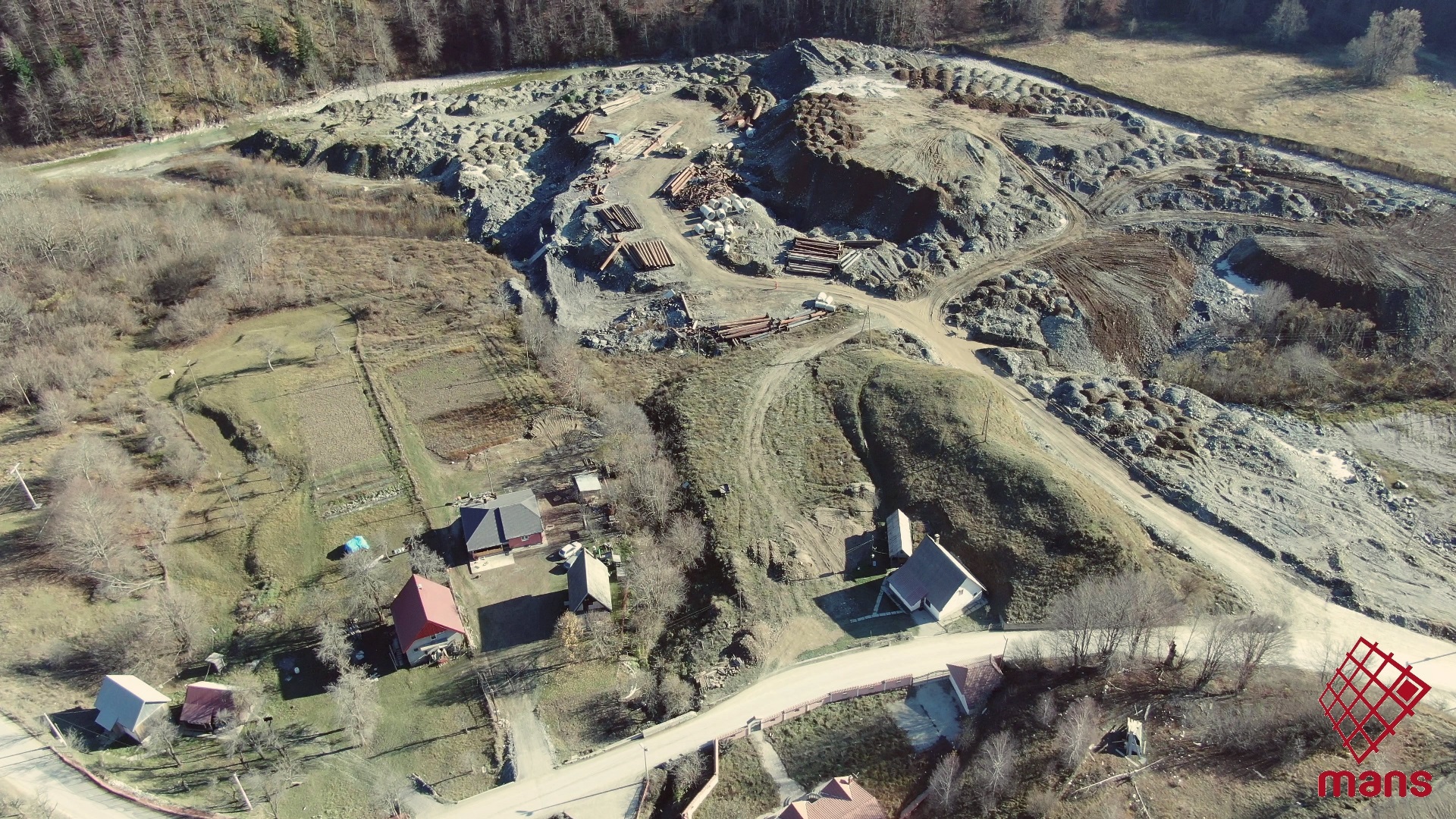
MANS Investigative Centre reveals that the Ministry of Sustainable Development (MSDT) has allowed the Chinese company CRBC to avoid the opening of two landfills, and instead, large quantities of excavated material on the highway section are being deposited into the very riverbed of Tara.
This is what Tara riverbed near the construction site of the priority section Smokovac – Mateševo highway looks like today. On both banks of the Tara river, hundreds of square meters of waste material from the nearby construction sites have been deposited, while on the site next to the camp Jabuka, a whole mountain of land and gravel is formed.
According to the Ministry of Sustainable Development, this is regulation of the Tara River basin, however, the documentation obtained by MANS Investigative Centre shows something completely different.
At the end of 2015, the Environmental Protection Agency issued consent to the Highway Impact Study prepared by the Chinese company CRBC, which is carrying out works on the construction of the highway.
This document “strictly prohibits the disposal of surplus material from excavation into the riverbed, river, river bank and agricultural land”. For this purpose, according to the Study, special landfills were envisaged, 14 of them on the entire section.
For disposing of the excavated material caused by perforation of the route and excavation of a tunnel near the Tara River at the so-called sub-section four, two landfills were planned at the locations of Trebišnjica and Jabuka near the future loop Mateševo.
These two landfills are also listed in a separate document, the Urban Waste Management Plan, which was done by the CRBC the same year.
However, the situation in the field shows that these two landfills are never opened, instead, CRBC deposited the excavated material into the riverbed and on the banks of the Tara River.
Such practice in the Ministry is now explained by the need to regulate the Tara river bed, although the existing Highway Impact Study does not mention this possibility, on the contrary, it explicitly prohibits the disposal of excavated material into Tara.
In mid-2017, CRBC drafted a document envisaging measures to protect the Tara River during the construction of the highway and for the first time announced that the land and the dumped material would be deposited into the riverbed and on the banks of the river for alleged regulation. This document was accepted by the line ministry, although it was entirely contrary to the previously adopted Study.
Finally, in October this year, the Ministry adopted a new Urban Waste Management Plan upon the proposal of CRBC, which definitely abolishes the proposed landfills, and notes that all materials that were supposed to be disposed there will be used for the regulation of Tara.
Nevertheless, Google Earth images from August this year show that CRBC had started to deposit the excavated material on the coast of Tara way before the adoption of the new Waste Management Plan that deleted the proposed landfills.
There is no doubt that, by this, MSDT helped CRBC reduce the costs of disposal, construction of landfills and access roads, and that the regulation of the Tara River has served precisely for this and not as it is stated to protect the environment from disposal.
This latest example of Tara’s devastation answers the question of why key information is hidden from the public, including those on environmental protection. When we have in mind what is happening on the construction sites of the highway, it is clear that the Government and the competent authorities wish to declare all the reports of all supervisory commissions secret.
It is absolutely unacceptable for the Government to continue to hide key documents regarding the construction of the highway, because the lack of any control other than the one implemented by the Government and CRBC itself, as we have seen, has immense consequences.
Dejan Milovac & Lazar Grdinić
Video from TV Vijesti


Phones
+382 20 266 326
+382 20 266 327
+382 69 446 094
Fax
+382 20 266 328
Copyright © 2025 MANS. All rights reserved.